
Chemical Engineering
Curriculum
🛈 By accessing the link, you can obtain detailed information about the curriculum.
About the Program
The dynamic and multidisciplinary field of Chemical Engineering integrates principles of chemistry, physics, mathematics, biology, and economics. It is used to design, optimize, and scale industrial processes, with a primary focus on transforming raw materials into valuable products through chemical processes. The discipline ensures efficiency, safety, and environmental sustainability.
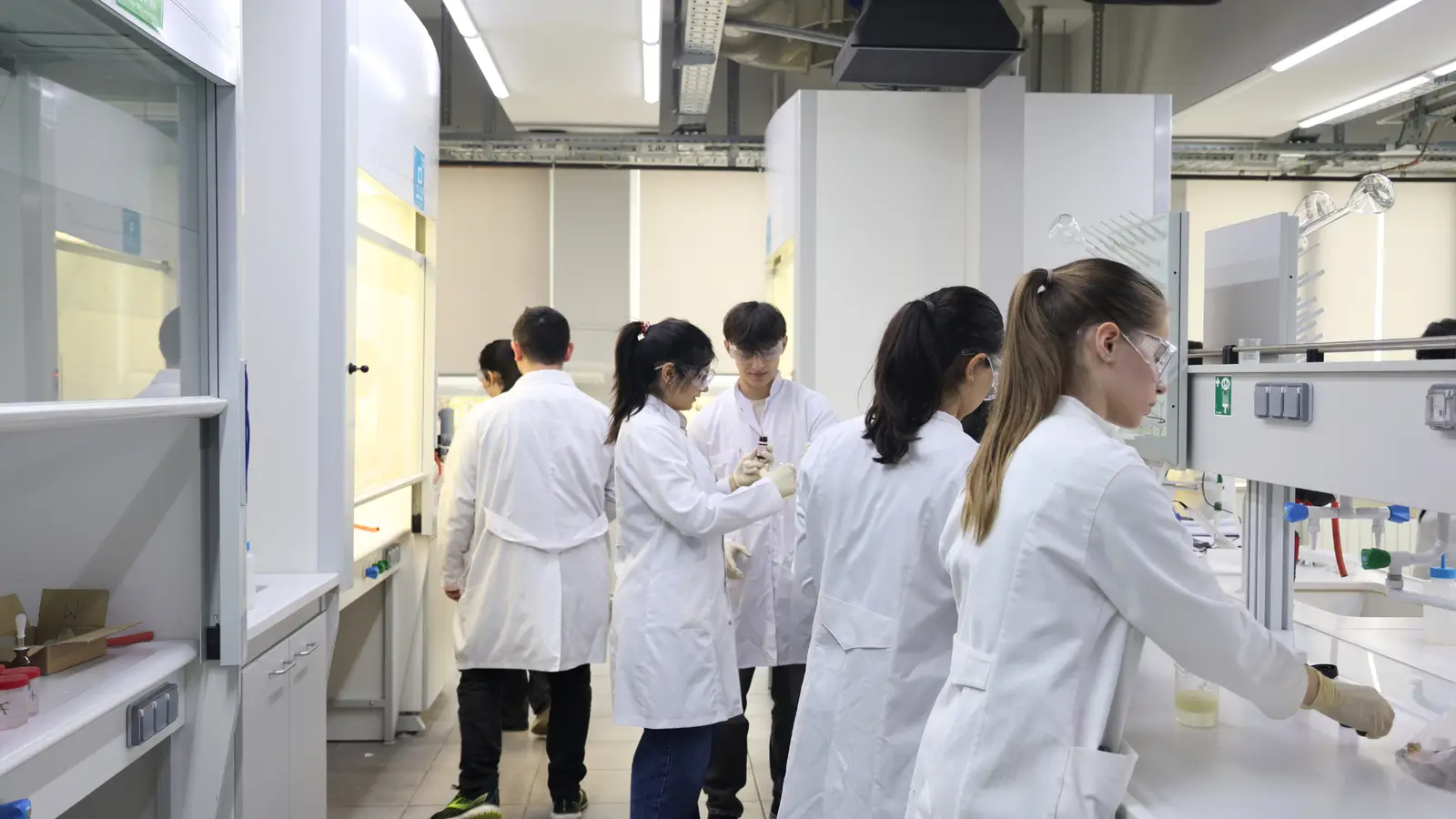
The Chemical Engineering program begins with foundational knowledge in mathematics, chemistry, and physics, and then progresses to more advanced topics, including process design, scaling up of production processes, analytical chemistry, and quality control. Students learn to apply theoretical knowledge in practice and to ensure the smooth operation of processes. The program combines theoretical coursework with practical laboratory experience, enabling students to solve complex problems and work effectively in industrial environments.
Graduates of this program receive diplomas from both the Azerbaijan State Oil and Industry University (ASOIU) and the University of Strasbourg (UNISTRA).
Knowledge and Skills Acquired
- Students acquire in-depth knowledge in chemistry, physics, and industrial control.
- The program combines theoretical knowledge with practical skills.
- Students focus on the design and optimization of production processes.
- They use modern simulation and modeling tools.
- Students learn to analyze and solve engineering problems by applying scientific knowledge.
- Laboratory courses are conducted in line with current industry requirements.
- The program places strong emphasis on compliance with chemical safety and environmental standards.
Career Opportunities
Graduates of UFAZ’s Chemical Engineering program have broad career opportunities in diverse fields such as the chemical industry, petrochemicals, pharmaceuticals, and environmental engineering. They are prepared for roles including process engineer, chemical safety engineer, production manager, and quality control specialist. Graduates can also engage in research and development, focusing on innovative chemical processes and the creation of new products. The skills acquired through the program enable them to work in technical consulting, project management, and process optimization. Additionally, graduates can pursue careers in the oil and gas, materials science, and environmental sectors, or continue their studies in master’s programs for further specialization.