1 day, 8 hours ago
UFAZ Alumnus Ali Mammadov Successfully Defends PhD Dissertation
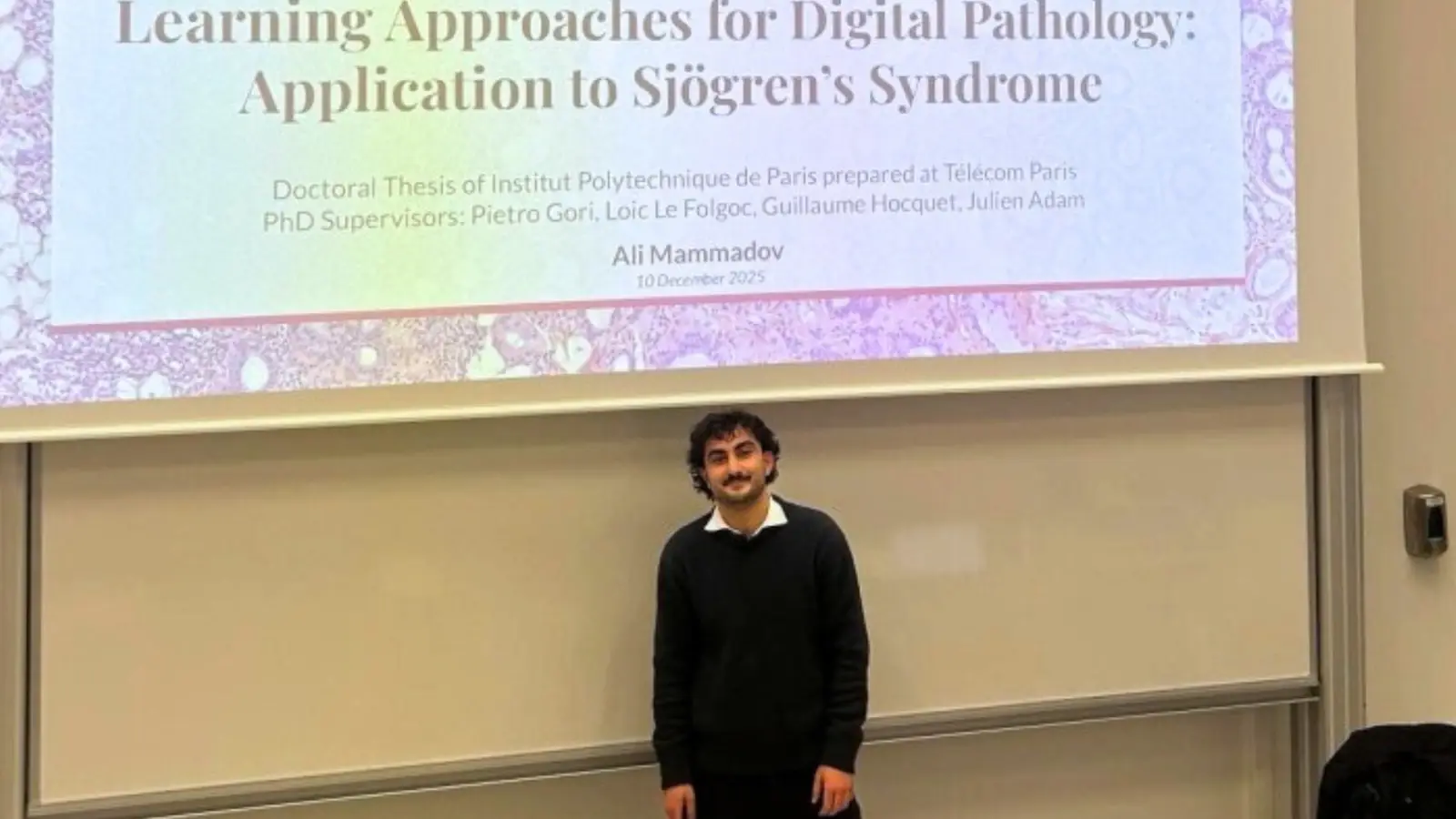
Ali Mammadov, a graduate of the French-Azerbaijani University (UFAZ) in Computer Science, earned his PhD degree in December 2025 from the Institut Polytechnique de Paris, one of France’s leading higher education and research institutions.
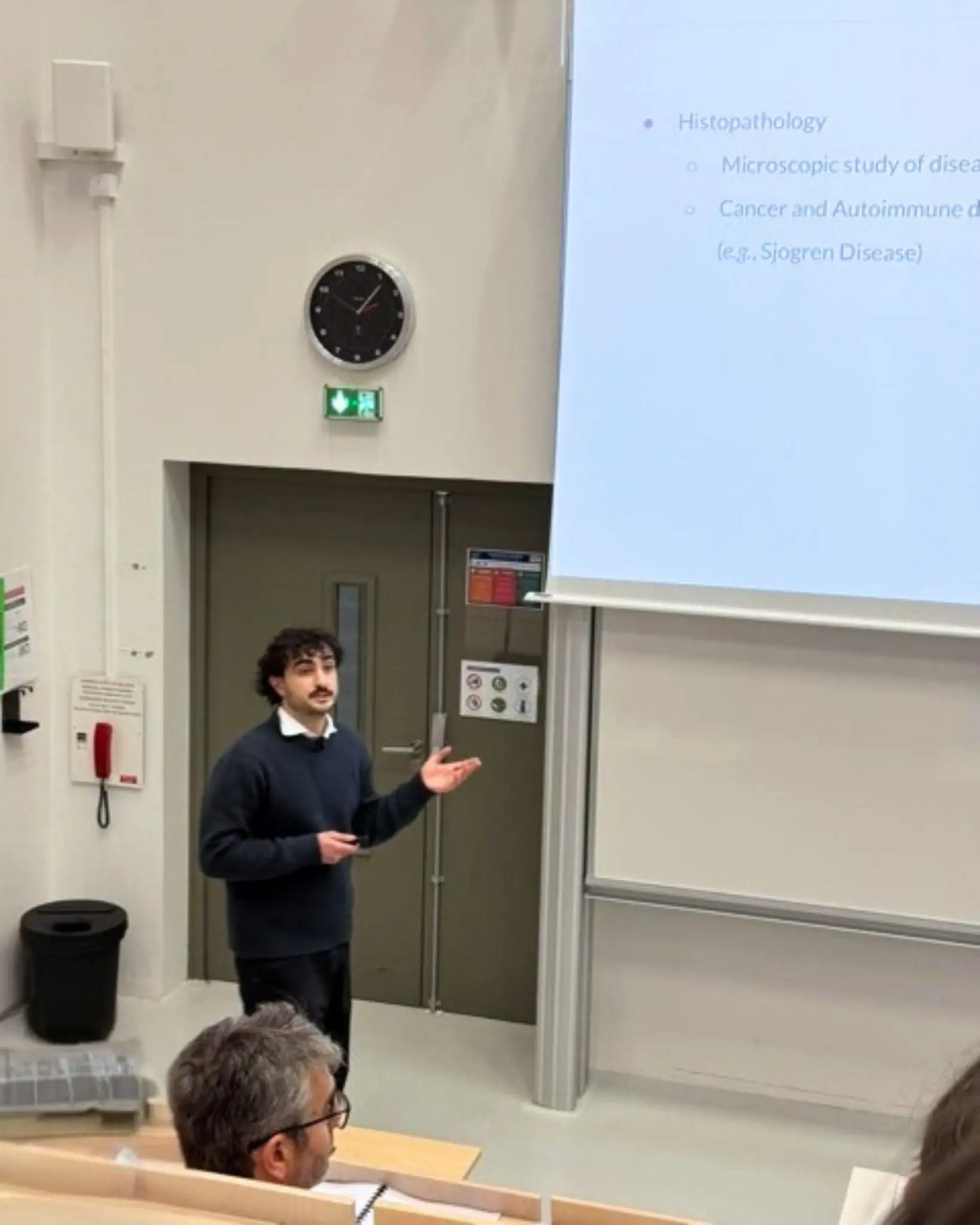
Ali Mammadov completed his doctoral studies at the LTCI Laboratory of Télécom Paris, within the doctoral school of Institut Polytechnique de Paris, specializing in Signal, Image, Automatic Control, and Robotics. His doctoral research focused on digital pathology and advanced machine learning approaches, with a particular emphasis on the diagnosis of Sjögren’s Syndrome.
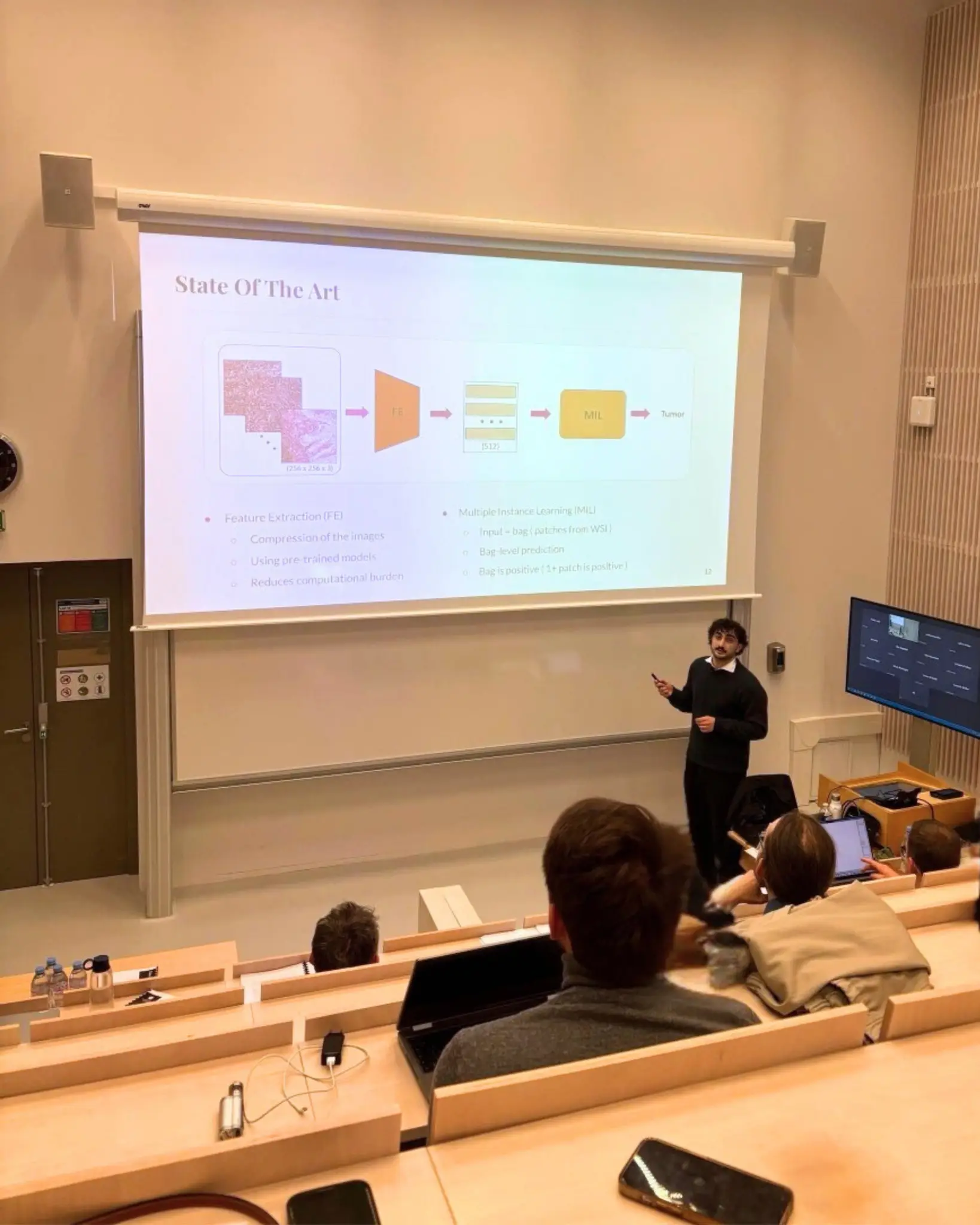
During his PhD, Ali investigated weakly supervised learning, self-supervised learning, and multiple instance learning (MIL) methods for the analysis of large-scale histopathology images. His work addressed key challenges in medical artificial intelligence, including model robustness, reproducibility, and clinical interpretability. The main outcomes of his research were presented as three core scientific contributions, all of which were published in international peer-reviewed journals and conferences.
One of his major contributions demonstrated that simple instance-based learning methods, when combined with properly designed self-supervised learning features, can achieve performance comparable to or better than complex whole-slide models. In other words, it is possible to extract significant information from medical images efficiently and effectively without relying on large, complex models. This approach allows high-resolution histopathology images to be analyzed faster, more reliably, and in a more scalable manner.
Another important contribution focused on the robustness and reproducibility of weakly supervised models. Ali identified significant performance variability in these models and proposed a multi-fidelity model fusion strategy, which substantially improves reliability, stability, and robustness – all critical for clinical deployment.
The third contribution addressed the creation of clinically interpretable AI systems. Ali developed a fully automated and explainable histopathology analysis pipeline that mirrors clinical reasoning, enabling reliable diagnosis of Sjögren’s Syndrome and fostering trust between medical professionals and AI tools.
Currently, Ali Mammadov works as a Computer Vision Research Engineer at SeeHaptic, where he contributes to the development of innovative perception systems that convert visual information into tactile feedback. These technologies aim to assist people with visual impairments or blindness, improving their daily lives.
We congratulate Dr. Ali Mammadov on this remarkable achievement and wish him continued success in his scientific career.