
an hour ago
UFAZ Graduate’s Research Article Published in a Prestigious Q1 Journal
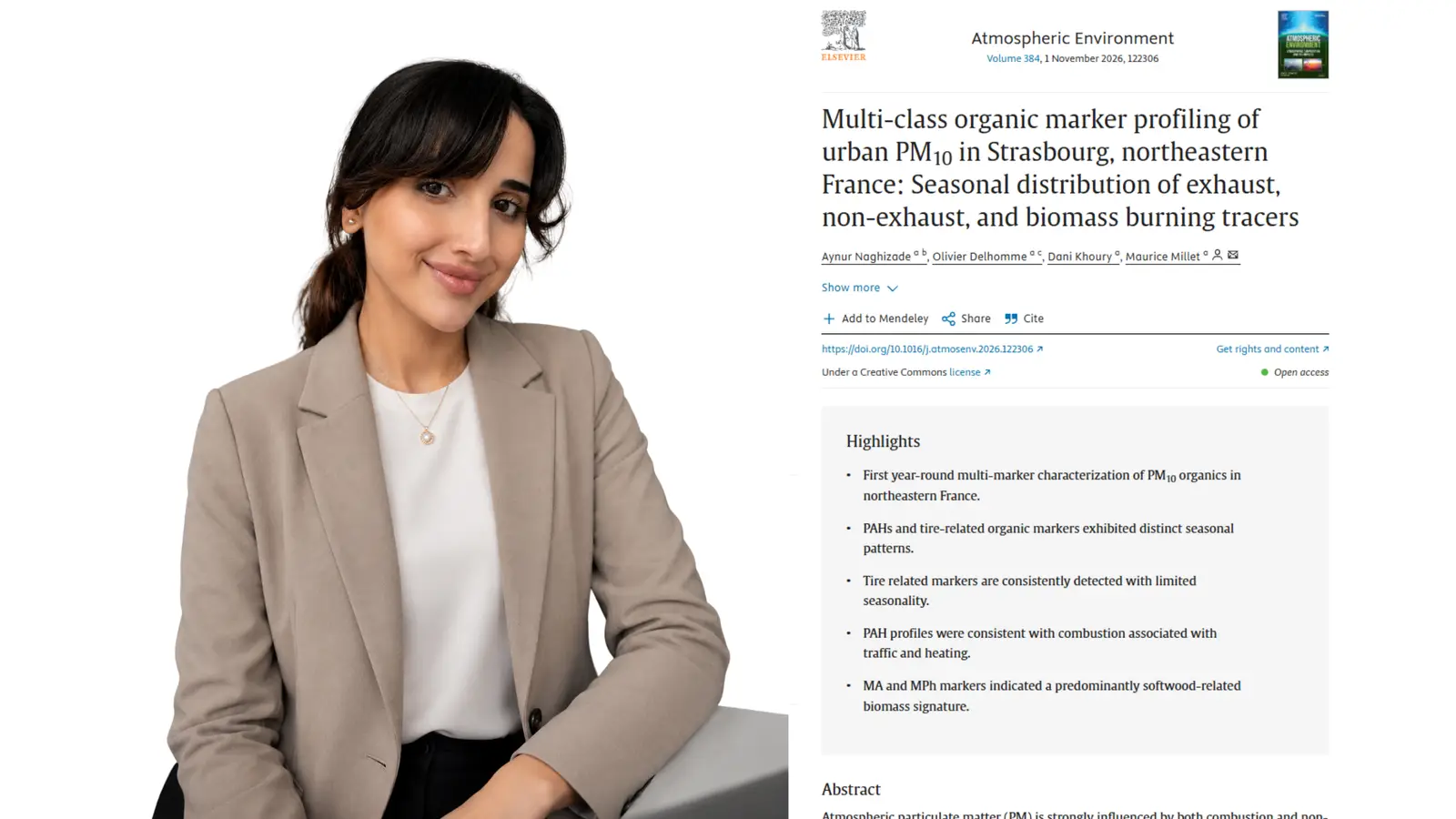
Dr. Aynur Naghizada, a graduate of the Master’s programme in Physical Chemistry/Chemical Engineering at the French-Azerbaijani University (UFAZ), has co-authored a research article published in the prestigious Q1-ranked journal Atmospheric Pollution Research. The article, titled “Seasonal variability and source-related molecular marker profiling of carboxylic acids and phenols in urban PM₁₀”, focuses on the molecular-level investigation of organic compounds present in PM₁₀ particles in the urban atmosphere.
The study primarily focuses on carboxylic acids and phenolic compounds associated with PM₁₀ particles in the urban atmosphere. Various organic compounds with different structural characteristics were examined, including dicarboxylic acids, fatty acids, alkylphenols, nitrophenols, chlorophenols, bromophenols, and aminophenols. The analysis of such molecular markers contributes to a more detailed characterisation of the chemical composition of atmospheric particulate matter.
Particular attention was paid to the seasonal variability of these compounds. For this purpose, weekly PM₁₀ samples were collected over a period of 36 weeks at an urban background monitoring site in Strasbourg, France. The study examined variations in the organic chemical composition of atmospheric particulate matter across different seasons, as well as the seasonal distribution patterns of individual compounds.
Another focus of the research was the identification of the sources and source characteristics of organic compounds detected in PM₁₀. Using molecular markers, the possible origins of various organic components in atmospheric particulate matter were investigated, including their potential links to anthropogenic activities, combustion processes, residential emissions, and other emission sources. This approach contributes to a more detailed characterisation of the chemical profile of atmospheric pollution.
The article also examines the chemical transformation processes affecting carboxylic acids and phenolic compounds in the atmosphere. In particular, photochemical processes, the formation of secondary organic aerosols, and the transformation of different compounds in the atmospheric environment are addressed within the scope of the study. This research direction provides insight into the formation, transformation, and distribution of organic components in the atmosphere and particulate matter at the molecular level.
The full text of the article is available via the following link: https://lnkd.in/d7-Qzuqn