
Geosciences
Curriculum
🛈 By accessing the link, you can obtain detailed information about the curriculum.
About the Program
This two-year program focuses on modeling the physical and chemical processes occurring within the Earth. In the second year, elective courses allow students to specialize either in natural underground resources (oil, gas, and minerals) or in advanced numerical modeling that incorporates artificial intelligence technologies applied in Earth sciences. The program is managed by the School and Observatory of Earth Sciences (EOST) at the University of Strasbourg.
The Geophysical Engineering program covers advanced topics in geology, geophysics, and geochemistry, requiring students to have a strong foundation in mathematics, physics, and computer programming. Instruction is delivered by experienced professors and associate professors from the University of Strasbourg and is complemented by specialized courses conducted by field experts.
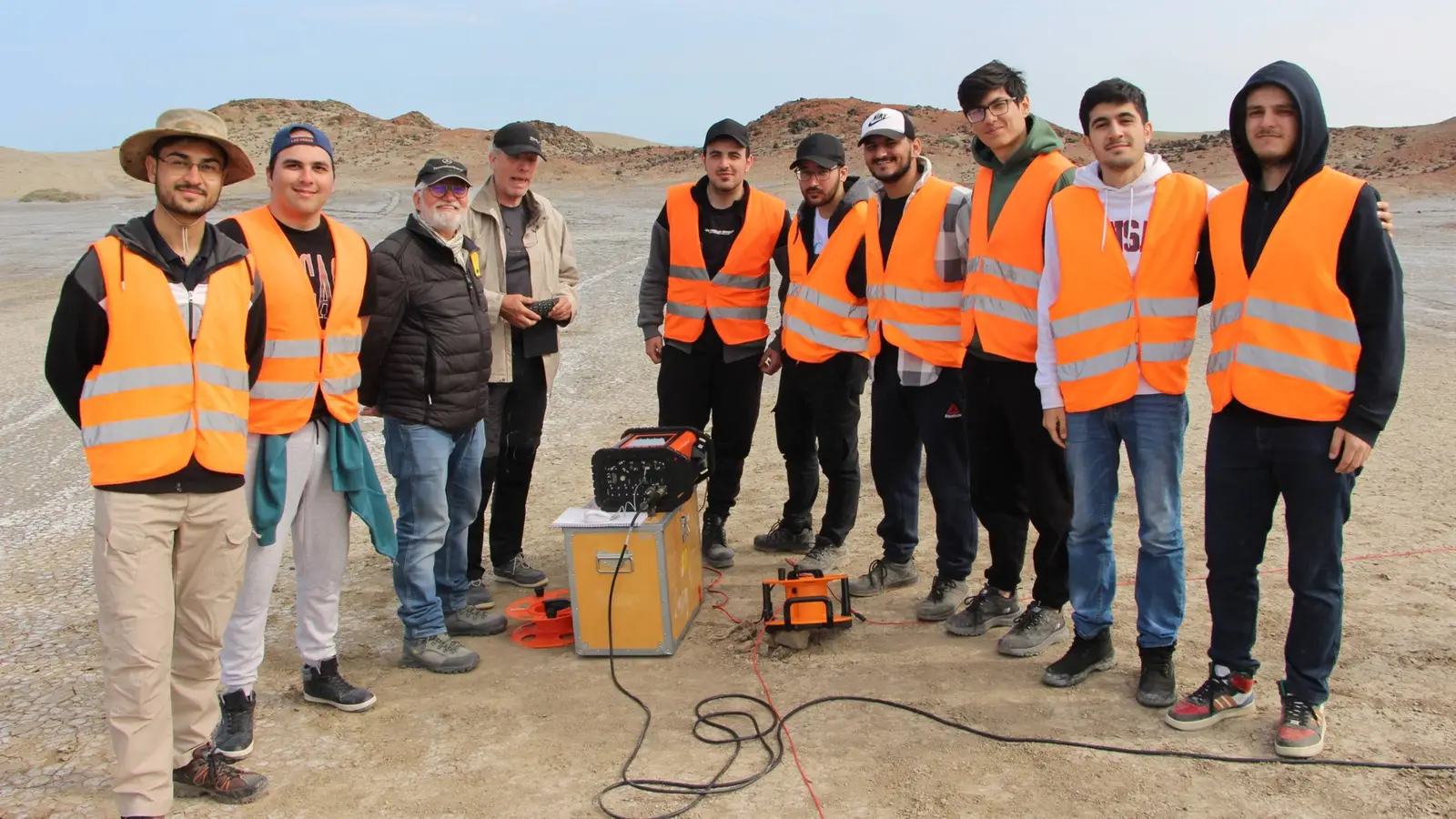
The spring semester of the first year concludes with a five-week field practice, while in the final semester of the second year, students complete a five-month internship either in a research laboratory or an industrial organization.
Graduates of the Geosciences program receive diplomas from both the Azerbaijan State Oil and Industry University (ASOIU) and the University of Strasbourg (UNISTRA).
Knowledge and Skills Acquired
- Students gain a strong theoretical, numerical, and practical foundation specialized in geophysics, geology, and geochemistry.
- They develop a deep understanding of Geosciences principles and physics, along with advanced mathematical skills applicable across various Earth sciences disciplines.
- Students acquire the ability to integrate knowledge from multiple scientific fields to solve complex geological problems.
- They gain experience in working and collaborating effectively within multicultural teams.
Admission Requirements
UFAZ seeks highly motivated and diligent students who can grasp complex concepts and apply them to solve challenging problems. The ideal candidate should hold a bachelor’s degree with foundational knowledge in physics, geology, and chemistry. Practical experience in chemical laboratories, fieldwork in geology and geophysics, as well as proficiency in Python programming, are considered advantageous.